
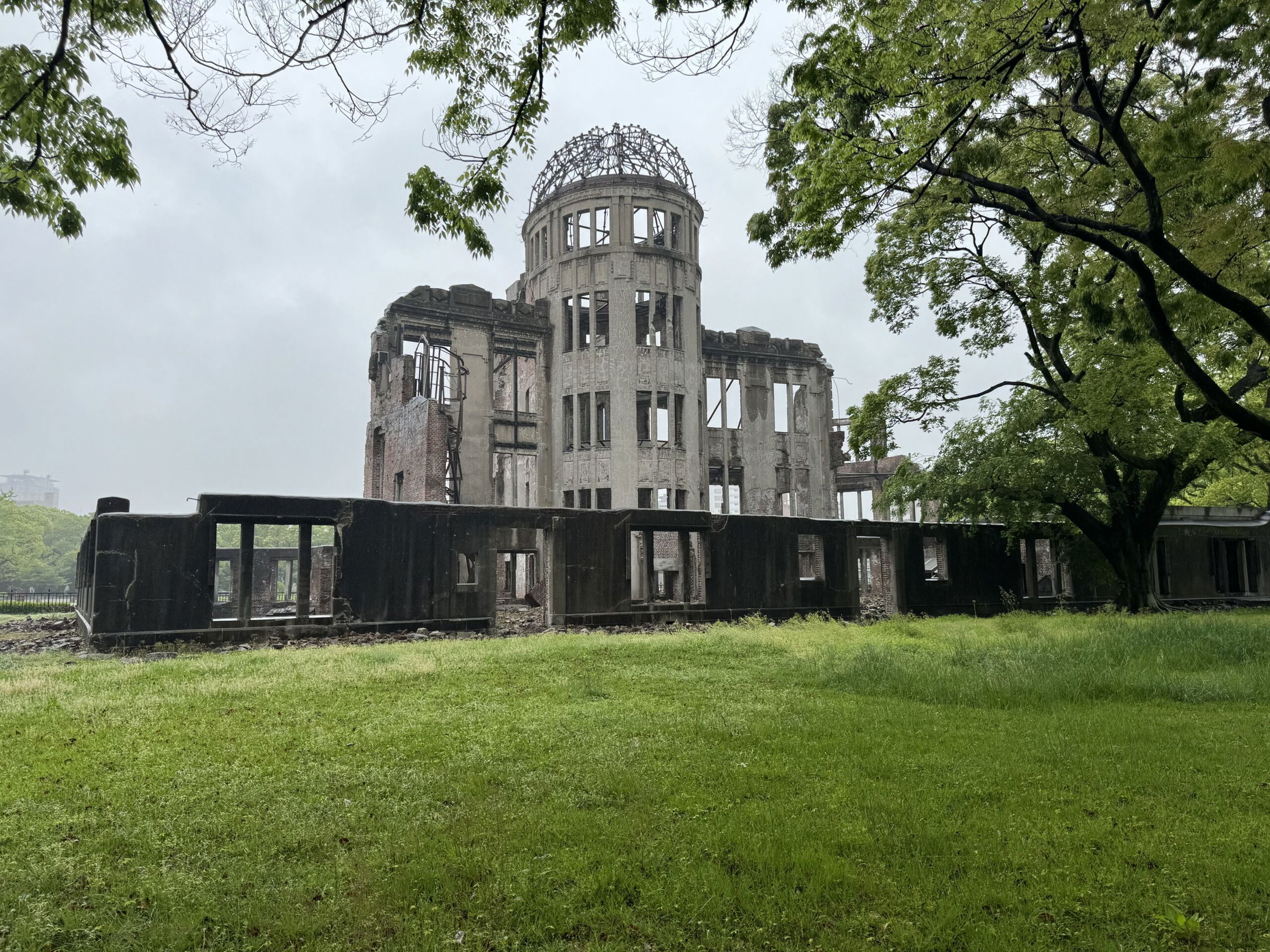
On my recent cruise around Japan, I visited two cities that I have always wanted to make a pilgrimage to, Hiroshima and Nagasaki. It is amazing how the two different cities have honoured their bomb sites. In Hiroshima, the epicentre almost turned into a shopping centre (an apartment block is on it with friendly snowboard instructors in the image).
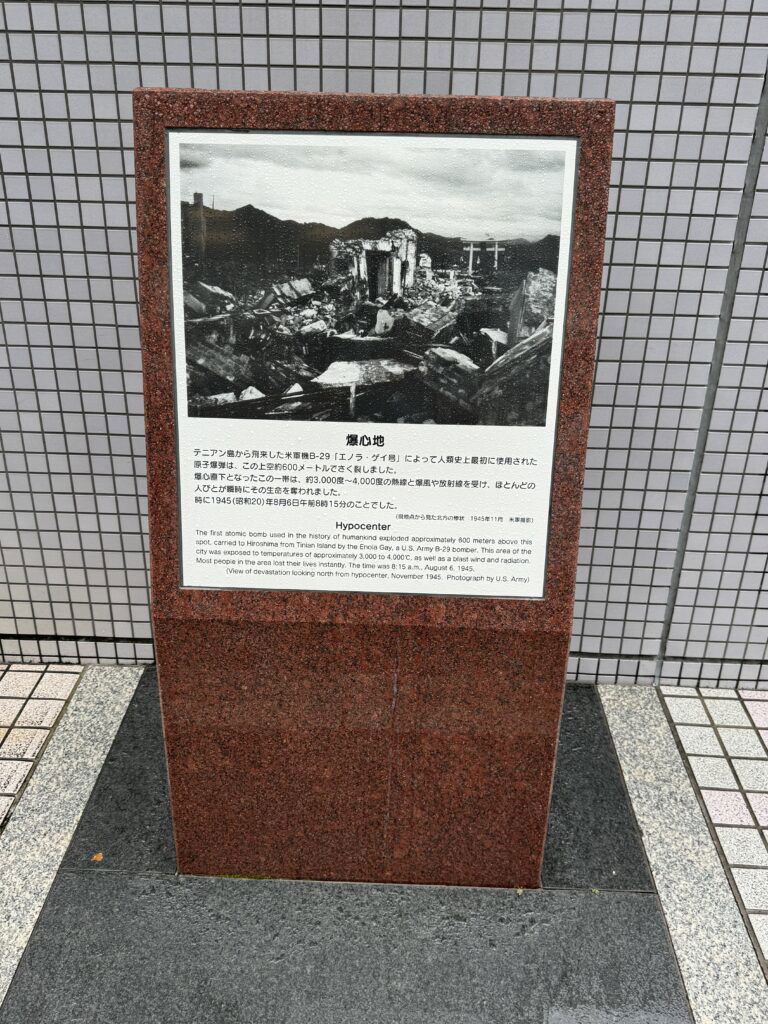

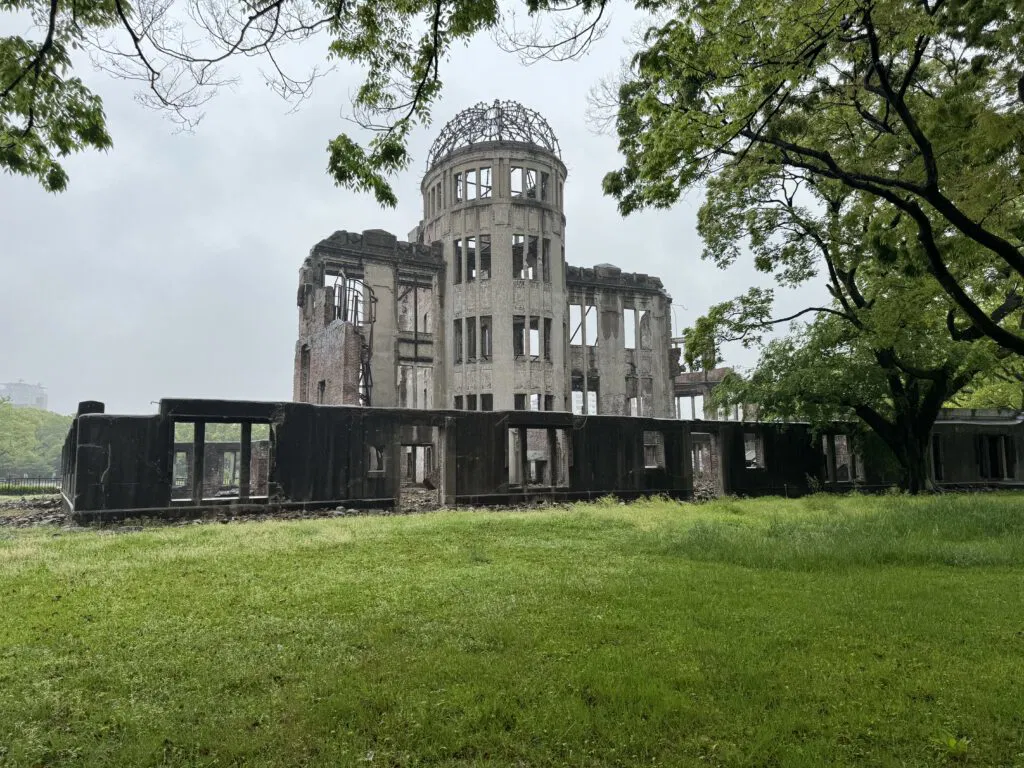
A few hundred meters away from the Hiroshima epicenter is this haunting relic – the Atomic Dome. This is all that is left of a once very grand building.
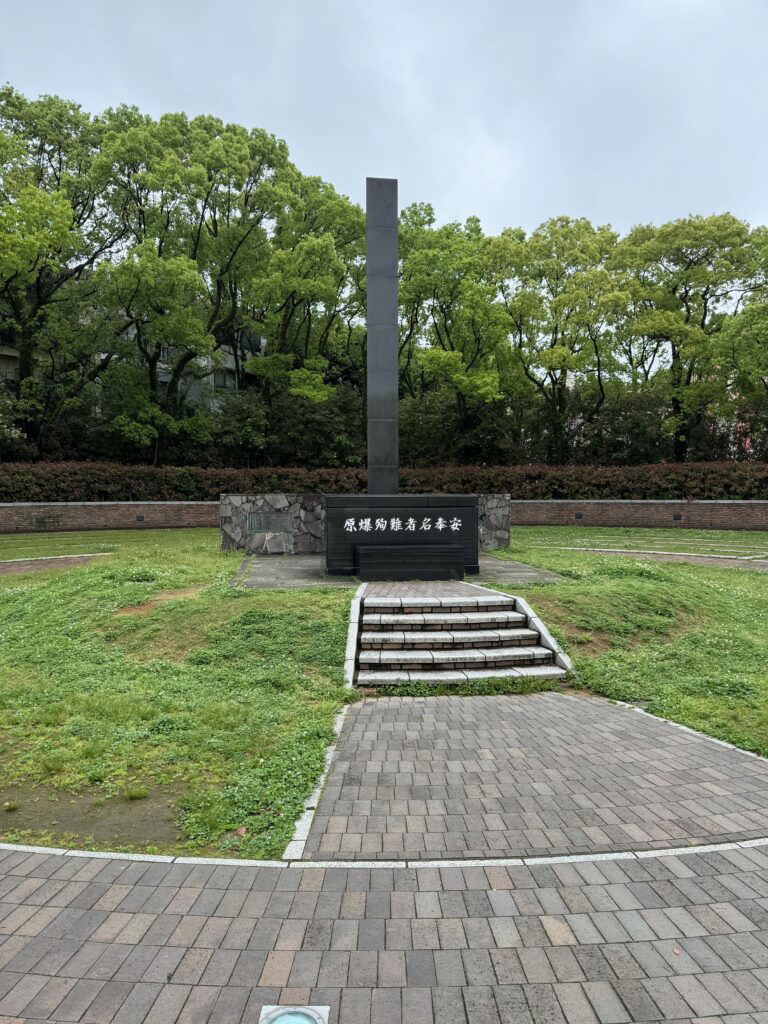
In Nagasaki on the other hand, the epicentre is still a depression in the ground with a large black monolith marking the direct hypocentre of the bombing. It is very sobering.
Anyway, onto the essay now.
On August 6 and August 9, 1945, the cities of Hiroshima and Nagasaki witnessed unimaginable horror when atomic bombs were dropped on them. These events marked the first—and only—use of nuclear weapons in war. The sheer scale of devastation left an indelible mark on humanity’s conscience. Over 200,000 lives were lost, communities were obliterated, and survivors faced lingering suffering from radiation exposure.
Seventy-eight years later, the specter of nuclear weapons continues to haunt us. Our world still harbors enough nuclear firepower to eradicate life on Earth many times over. As tensions fluctuate among global powers, the urgent need to revisit the lessons from Hiroshima and Nagasaki has never been clearer. Why do we persist in maintaining these arsenals? Aren’t there more compelling reasons now than ever before to pursue complete disarmament? Let’s explore these crucial questions as we navigate through the devastating impact of those bombings and what they represent for our future.
The Devastation of Hiroshima
On August 6, 1945, the city of Hiroshima was thrust into a nightmare when an atomic bomb detonated over it, leading to catastrophic consequences. The immediate impact on human life and infrastructure was beyond comprehension. Within seconds, the intense explosion obliterated buildings and incinerated tens of thousands of people. Those within a one-mile radius of the blast center were either vaporized or severely burned by the intense heat. The powerful shockwave flattened almost everything standing – from homes to schools and hospitals – devastating the urban landscape. The initial death toll numbered around 70,000, but countless others succumbed to their injuries in the following days, weeks, and months.
The destruction extended far beyond physical devastation; it irrevocably altered the environment for generations to come. One of the most insidious long-term effects was radioactive fallout, which blanketed Hiroshima following the explosion. This deadly contamination seeped into soil and water sources, posing lingering health risks to survivors who already faced tremendous suffering from acute radiation sickness. Many experienced severe health issues such as leukemia and other cancers that emerged years after exposure. Moreover, genetic mutations caused by radiation affected subsequent generations, casting a shadow over families long after peace had supposedly returned.
Environmental damage also manifested in more subtle yet pervasive ways. Vegetation in Hiroshima suffered immense harm; trees were scorched barren while flora species struggled to take root again in contaminated soils – eerie reminders of nature’s vulnerability to human actions in wartime savagery. Rivers became conduits for radioactive materials that spread toxins downstream into surrounding areas’ ecosystems. Fish populations dwindled due to polluted waters making food scarce for communities relying on them for sustenance priorly rich with life diversity defining how profoundly warfare scars our planet along its inhabitants indefinitely through heinous unrelenting cycles perpetuated every continued armament unresolved confrontation fueling escalation amidst power struggles globally deepening humanity’s potential peril pushing imminent beyond brink redemption should arms persist unchecked driven forward unyielding quest endeavor disarmament ultimately hoped achieve collective survival harmony preservation shared steward future generations entrusted inherit Earth lasting peace envisioned era post-conflict unity fortitude faith durability existence free perennial threat eradication fostering prosperity inclusive society equitability restored ardor collaboration guiding principle transcend lasting legacy flourish boundlessly otherwise curtailed brinksmanship played field horror relived nightmares shadows remembrances reverence lives lost fulfilled unequivocally imperative ensuring transcendent realization endeavor eternal vigilance remembrance save steadfast principles enduring paramount values upheld revered guiding continual journey resilience optimism sails aspirant anchoring aspirations noble destiny woven threads continuum divine trajectory cosmic odyssey fragile finite safeguard treasure humanity bound bridging divides benevolent embrace shared destinies boundless infinite joy forever thriving radiant glow ever present zentimized state self-actualization humanity’s highest noblest purpose lived breathed achievable dreaming striving realizing actualizing ultimate fruition grandest vision Peace Earth Home radiates shines verily illuminative cohesive concord!
The Aftermath in Nagasaki
The atomic bombing of Nagasaki, which occurred just three days after Hiroshima’s devastation, compounded the unimaginable human suffering and presented its own grim tableau of medical consequences. Instantly, tens of thousands lost their lives, while countless survivors—known as hibakusha—endured severe burns, wounds, and radiation sickness. Many victims suffered from acute illnesses characterized by nausea, hair loss, and bleeding, followed by chronic conditions such as cancer and leukemia that appeared years later. These health impacts were not limited to those directly exposed; subsequent generations experienced genetic defects and various hereditary diseases due to the radiation.
The socioeconomic impact on Nagasaki was also devastating and far-reaching. The once-thriving port city was reduced to rubble in mere moments. Economic activities ground to a halt as factories were destroyed and essential infrastructure obliterated. This led to massive unemployment and dire poverty among the survivors who had already lost everything. Agriculture suffered dramatically due to radioactive contamination of land and water sources, further exacerbating food shortages for an already starving population.
In addition to direct economic losses, the social fabric of Nagasaki was fundamentally altered. Discrimination against hibakusha hindered their ability to find employment or marry outside their community, adding another layer of suffering. The psychological trauma endured by survivors was staggering; many grappled with post-traumatic stress disorder (PTSD), depression, and anxiety throughout their lives. As they rebuilt their shattered lives amidst ruined landscapes and haunted memories, the people of Nagasaki became living testimonies to the terrifying power of nuclear weapons.
However bleak these experiences were, they also inspired resilience and activism among survivors who dedicated themselves to ensuring that no other city would face similar horrors. Their advocacy played a pivotal role in shaping global movements aimed at nuclear disarmament. Through personal storytelling and public outreach efforts, they have consistently reminded the world of the true cost of warfare marked by weapons of mass destruction—a legacy we are invited today not just to remember but also actively work against repeating.
Global Response to Nuclear Warfare
The haunting memories of Hiroshima and Nagasaki have spurred significant movements across the globe, advocating for a nuclear-free world. In the wake of these bombings, the international community swiftly sought measures to prevent such devastation in the future. The most notable response was the formation of various international peace treaties aimed at curbing the proliferation of nuclear weapons. The Treaty on the Non-Proliferation of Nuclear Weapons (NPT), established in 1968, is one such agreement where state parties committed not to transfer nuclear weapons or other nuclear explosive devices, and to work towards disarmament.
In addition to formal treaties, grassroots and political movements also emerged with vigor. The anti-nuclear movement gained momentum particularly during the Cold War era when fears of a potential global catastrophe were at their peak. Organizations like International Campaign to Abolish Nuclear Weapons (ICAN), which won a Nobel Peace Prize in 2017, have played pivotal roles in raising awareness and pushing for legislative changes through persistent advocacy and education.
A crucial aspect often overlooked is how these movements have managed not only to influence policy but also public opinion worldwide. For instance, Japan itself has been a staunch advocate for nuclear disarmament since experiencing firsthand its catastrophic effects. Hiroshima Peace Memorial Park serves as both a sobering reminder of destruction and an enduring symbol promoting global peace initiatives. Moreover, these movements are instrumental in educating upcoming generations about the grave consequences associated with nuclear warfare; festivals, educational programs, and documentaries continue to sustain vital conversations around this topic.
Overall, these combined efforts illustrate a global commitment to mitigating the risks posed by existing nuclear arsenals while striving toward eventual disarmament.
Moral and Ethical Implications
The sheer devastation wrought by the atomic bombings of Hiroshima and Nagasaki in 1945 serves as a grave reminder of the human cost of nuclear weapons. When “Little Boy” detonated over Hiroshima, it instantly vaporized tens of thousands and inflicted untold suffering on survivors who were left to grapple with radiation sickness, cancers, and psychological trauma. Similar catastrophic effects followed when “Fat Man” was dropped on Nagasaki just three days later. These unprecedented losses not only bring into sharp focus the profound moral weight carried by such weapons but also serve as a call to dismantle them before another city is reduced to ashes.
Ethical concerns extend beyond immediate casualties to encompass long-term ramifications for humanity and the planet. Nuclear weapons pose risks so severe that their very existence destabilizes global security. The theoretical concept of Mutually Assured Destruction (MAD) assumes that deterrence will prevent nations from deploying these armaments; however, this strategy perilously hinges on rational behavior in irrational times. Miscommunications or accidents could potentially trigger apocalyptic scenarios, making every moment teetering between peace and annihilation not just unsustainable but morally untenable.
Moreover, weapons of mass destruction eschew any ethical frameworks normally applied to warfare—such as discrimination between combatants and non-combatants or proportionality in response. They inflict harm indiscriminately, disproportionately affecting civilian populations while decimating cultural heritage sites and natural habitats essential for ecological balance. In many respects, using or even maintaining a nuclear arsenal contradicts foundational principles upheld by international humanitarian law designed to minimize suffering during conflicts. This necessitates urgent ethical reflection from global leaders and individual citizens alike toward a shared goal: a world free from the shadow of nuclear annihilation.
Nuclear Weapons Today: A Persistent Threat
Despite the devastating lessons from Hiroshima and Nagasaki, the world today remains shadowed by the persistent threat of nuclear weapons. According to recent data, approximately 13,000 nuclear warheads exist globally, with Russia and the United States holding about 90% of this arsenal. Countries like China, France, and the United Kingdom also maintain significant stockpiles, alongside emerging nuclear states such as North Korea. The existence of these arsenals continues to pose an existential risk to humanity.
Maintaining and modernizing nuclear arsenals bring along numerous risks. Firstly, the chance of accidental launches due to technical malfunctions or human error cannot be underestimated, as history has shown near-misses that could have triggered catastrophic consequences. For instance, in 1983, a Soviet officer named Stanislav Petrov averted a potential disaster by correctly identifying a false alarm of incoming US missiles. This example underscores how perilous it is to rely on technology and frail human judgment within high-pressure environments.
Moreover, the financial burden associated with maintaining these arsenals diverts critical resources away from pressing global issues such as health care, education, and climate change mitigation. It is estimated that the US alone spends billions annually on its nuclear programs – funds that could rather contribute toward sustainable development goals. Additionally, possessing such destructive capabilities fosters international tensions and encourages proliferation among other nations seeking similar security assurances or regional dominance.
These ongoing risks accentuate why disarmament is not merely an idealistic pursuit but an urgent necessity for present-day policy-making. Building pathways towards reducing nuclear stockpiles through treaties like New START between Russia and the US sets a precedent; however, comprehensive multilateral agreements involving all nuclear-armed states are essential for enduring global security.
The Role of International Organizations
In the wake of the atomic bombings of Hiroshima and Nagasaki, the international community has recognized the urgent need for nuclear disarmament. The United Nations has been at the forefront of these efforts, with initiatives such as the Treaty on the Non-Proliferation of Nuclear Weapons (NPT), which was enacted in 1970. This pivotal treaty aims to prevent the spread of nuclear weapons and promote peaceful uses of nuclear energy while ultimately striving for global disarmament. More recently, the UN introduced the Treaty on the Prohibition of Nuclear Weapons (TPNW) in 2017, marking a historic step towards achieving a world free from nuclear arms by legally prohibiting their development, testing, production, acquisition, possession, stockpiling, use or threat of use.
Non-governmental organizations (NGOs) have also played an instrumental role in advocating for a nuclear-free world. Notable among these is the International Campaign to Abolish Nuclear Weapons (ICAN), which was awarded the Nobel Peace Prize in 2017 for its persistent efforts to draw attention to the humanitarian impacts of nuclear warfare and spearheading support for TPNW. ICAN’s grassroots activism includes organizing global awareness campaigns and engaging directly with policymakers to foster stronger commitments toward disarmament.
Furthermore, there are other influential NGOs like Global Zero that actively push for pragmatic steps towards reducing and eventually eliminating nuclear arsenals worldwide. These entities leverage their networks to build public pressure and influence national policies by producing detailed research reports and facilitating high-level conferences where experts from various sectors converge to discuss strategies for disarmament.
The collaboration between intergovernmental bodies like the UN and proactive NGOs demonstrates a unified stance against nuclear armaments. Their combined efforts underscore not only an acknowledgment of past tragedies in Hiroshima and Nagasaki but also an unwavering commitment to ensuring such catastrophic events are never repeated. Through continued advocacy, policy-making initiatives, educational programs, and diplomatic engagements across borders, these international organizations’ collective endeavors serve as beacons guiding us towards a more secure future devoid of nuclear threats.
Steps Toward Global Disarmament
Potential policies to achieve complete disarmament involve both comprehensive multilateral agreements and unilateral actions by nuclear-armed states. One significant step could be the reinforcement of existing treaties like the Treaty on the Non-Proliferation of Nuclear Weapons (NPT) with stricter verification mechanisms and punitive measures for non-compliance. Further, new treaties focusing specifically on prohibiting the production of fissile material and initiatives incorporating phased disarmament procedures can drive meaningful progress. Countries might also adopt policies that commit to a “No First Use” (NFU) doctrine to reduce the chances of nuclear conflict, thus building global confidence in their intentions.
The importance of diplomatic relations and trust-building cannot be overstated in the journey towards global disarmament. Historical examples illustrate how effective diplomacy facilitates monumental outcomes: consider President Reagan and Premier Gorbachev’s negotiations during the Cold War, which led to significant arms reduction via the Intermediate-Range Nuclear Forces Treaty (INF). Equally crucial is transparency among nations; mutual inspections, open communication channels about military capabilities, and sharing data on stockpiles foster an environment where trust between nations grows stronger over time.
Building a strong diplomatic foundation requires consistent dialogue not just between longstanding adversaries but also among all stakeholders globally. Inclusive efforts involving non-nuclear countries can amplify pressure on nuclear states while ensuring collective security interests are addressed. Engaging civil society, academic institutions, and subject matter experts to participate in these dialogues adds layers of external accountability and introduces innovative perspectives that may expedite consensus-building processes.
In conclusion, potential policies for global disarmament coupled with revitalized diplomatic efforts create a roadmap toward a safer world free from the looming threat of nuclear warfare. The lessons from Hiroshima and Nagasaki underscore a shared human responsibility to ensure such tragedies never recur. Through steadfast international cooperation rooted in trust and transparency, complete disarmament is not merely an idealistic vision but an achievable goal within our grasp.
The Path Forward
The lessons from Hiroshima and Nagasaki are clear: nuclear weapons bring unparalleled destruction and long-lasting suffering. Their use decimates human life, eviscerates entire cities, and leaves generational scars on both people and the environment. Despite various treaties and anti-nuclear movements, the persistent threat of these weapons remains a stark reality.
Now more than ever, global cooperation is imperative for achieving nuclear disarmament. Policymakers, activists, international organizations, and individuals must unite to foster diplomatic relations and build trust among nations. Only through collective action can we ensure that such catastrophic events are never repeated. The time to act is now; our very future depends on it.

Leave a Reply